
When Vikings threatened Studham
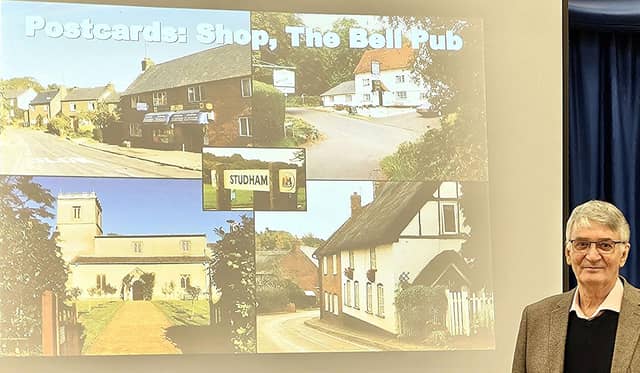

A turbulent time in Studham’s past was described in a talk about the village at the January meeting of Dunstable and District Local History Society.
There was a packed audience for a Powerpoint display by Derek Spriggs which concentrated on Studham’s changing fortunes in the 10th and 11th centuries. The comparatively prosperous and well-ordered community was living with the constant threat of a violent takeover by Viking invaders who, year by year, had infiltrated much of England as well as vast areas of Europe.
Derek displayed maps showing the extent of the Viking expansion, which included the areas now known as Ukraine and the part of France called Normandy, and gave an outline of the actions and rivalry of the various Viking leaders
Studham had hopes of protection from their ambitions when its owners, Oswulf and his wife Aethelgyth, gave their land to the Abbey at St Albans, whose Bishop proclaimed that anyone who robbed St Alban of the gift would be excommunicated and “shall be forever condemned with Judas, who betrayed our Saviour.”
It was called The Curse of Bishop Wulf.
The protection was of little help after the Battle of Hastings in 1066 when William of Normandy, himself of Viking descent, conquered England.
Frederick, Abbott of St Albans, wrote that after 1066 “the ills falling upon the land began to multiply”. There was “robbery, envy, haughtiness, all-night gambling, drinking sessions, different forms of lechery, unclean acts and perjury…”
Whether or not this was an exaggeration, Derek Spriggs was able to demonstrate that the value of land and property at Studham fell considerably after the Conquest. The southern Anglo-Saxons took to the hills to wage a war of harassment on William. Studham’s location was ideal for a military camp but over the 20 years from 1066 to 1086 the area was devastated.
Dunstable History Society’s next meeting will be at 7.45pm on Tuesday, February 10, at Dunstable Methodist Church’s hall, where Stephen Coleman will talk about the extensive fruit orchards which were once an important source of livelihood in the villages around Dunstable.