
Historian delves into Luton’s 150-year story of reinvention

From hat-making homes to a modern multicultural town, one historian says Luton’s history is one of constant change, shaped by its people.
We spoke to Dr Serenella Sessini, curator and historian at Wardown House Museum,about the town’s flair for reinvention, innovation and growth as we celebrate 150 years of borough status.
Decades ago, Luton was the hat-making capital of the world, with its straw boaters becoming synonymous with the town and its football club.
Dr Sessini explained just how widespread the trade was in the town.
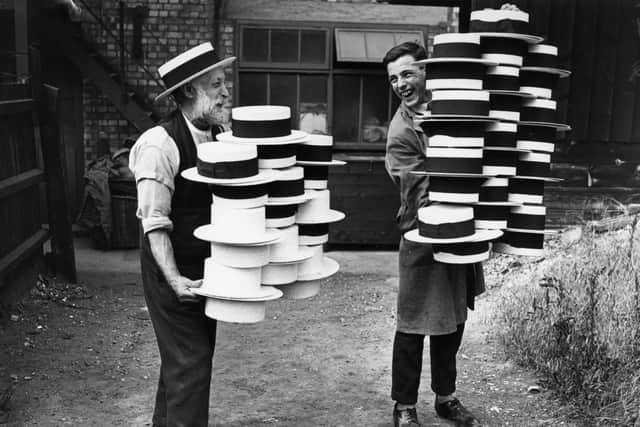

She said: “The straw hat making business was quite cheap to set up… people just expanded their house and had a room dedicated to that. There were about 500 factories… It’s like every other house really was part of the industry.”
Many Victorian houses were converted into mini factories, and if you live in a terraced house from the era with an extension out the back, that’s a sign it was once used to make hats.
Inside the museum, hundreds of hats and machinery tell the story of innovative milliners using materials they had - straw from nearby farms and fields - to create what would become a symbol of Luton.
Dr Sessini said: “When the straw hat industry declined, they started to use felt instead.”
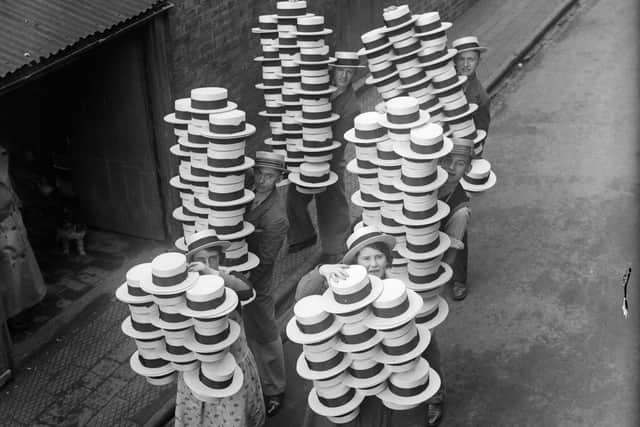
Reinvention and moving with the times have always been part of the town.
As the hat industry declined, engineering took its place, and Vauxhall took off in the town.
She said: “Luton is a town that has never shied away from reinventing itself. So much knowledge and engineering skills in the town meant other industries felt like this was a good place to come and develop.”
And for more than 120 years, Luton was a major British industrial centre, having produced much-needed tanks for the Second World War effort.
Luton holds a lot of hidden history, even in its name, meaning the town on the River Lea.
The town was hit by German bombers during the Second World War, and there are small nods to this history around the area, which can be found on the Hat Factory’s trail.
Dr Sessini said: “Luton was one of the centres bombed in 1940 quite heavily. Lots of people died.
“Places in the town are still linked to this side of history and are now built on… you only know if you go and look for those traces.”
Sharing history, skills, and knowledge has always been important to the people of Luton, just as adaptability has.
The historian said: “If these things are not then passed on to the new and younger generation, they’re just going to be lost. Young people need to know this history so they can be proud of coming from here.”
And in more recent times, Dr Sessini says “the town has been built by diversity”.
She explained: “It is such a vibrant town. A wonderful history of migration and movement… from Scottish and Irish, to the Windrush generation, to people from Bangladesh, Pakistan, India, Eastern Europe.”
New developments, businesses and creatives emerging from the town mean the future is bright for Luton, whose history is not static or nostalgic, but a living resource.
From ancient river settlements to industrial innovation and modern migration, the pride of the town has been in its people and spirit.
She added: “With Vauxhall leaving, it’s perhaps an opportunity… what would be the next version of Luton?”