
Luton History: They were all fed up with the 'man-made rain'

Local historian Jackie Gunn is on a mission to share stories of Luton's yesteryear. Join her to revisit the past as she researches the town's buried secrets…
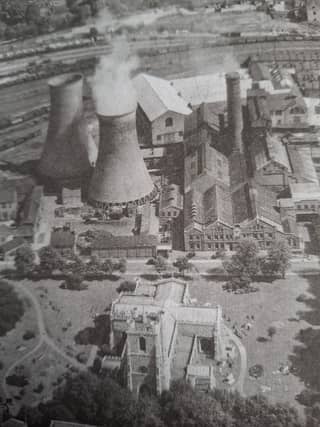
Power Court now under redevelopment was the former site of the enormous concrete cooling towers.
The iconic structures were prominent features of Luton's skyline for over 60 years, frequently photographed from nearby St. Mary's Parish Church, they reminded me of two gigantic vases perched on a potter's wheel.
Luton Corporation obtained a provisional order in 1895 under the Electric Lighting Act to generate and supply electricity to the Borough of Luton, which was commissioned in 1901.
The huge Towers were built in the gardens of the abandoned St. Mary's Vicarage that had fallen into decay. However, there was strong support to retain the Vicarage, but sadly it was demolished around 1907.
The towers, when in operation, flowed torrents of warm water cascading downwards to a pond at the base, the air cooling as it fell, plumes of water vapour rose through the structure out into the atmosphere, generating electricity for the nearby power station.
Some cooling towers reach heights of over 100 metres but they are not the unsophisticated masses of concrete they appear. A Civil Engineer explained: 'It's basically like an eggshell, the shape gives it the strength, 'He also added when stepping into a shutdown or decommissioned tower it is the weirdest place on earth, the vast emptiness can be eerily silent, even the smallest noise or whisper echoes around the huge empty shell.'
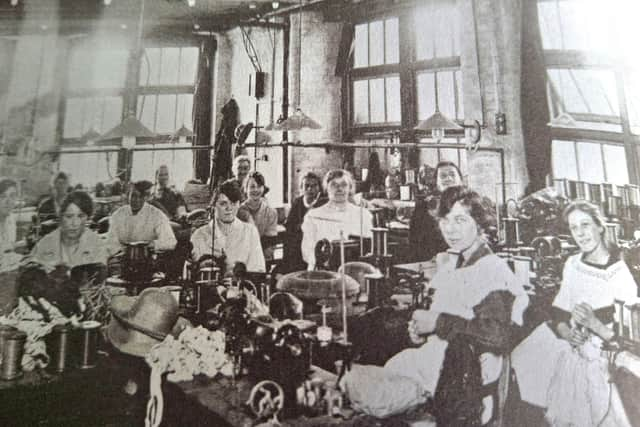
Luton's industry welcomed this new form of energy. Electric was a bonus for the hat trade, enabling production to double. The car industry, albeit in the early stages, increased output, and slowly gas lighting came to an end.
Luton' s manufacturing doors were open for business seeking future Investment; George Kents, Skefco and Commercial Cars, to name, but a few were fully operational in the town by 1912.
During the second war the towers were camouflaged, masked with green mesh netting protecting the towns challenging contribution to the war effort.
By 1948, Luton's electricity was under new ownership of the British Electricity Authority, later transferred to the Eastern Electricity Board.
However, by 1957 the residents of Depot Lane, Church Street, Luton, were angry and fed up with the 'man- made Rain' that sprayed down among the houses forever and a day.
They say: 'It's always raining in our street, we can't dry our washing, the vapour blows upwards and mixes with the smokestacks and down it comes all over our windows ,washing and paintwork.'
Despite efforts by the Electricity Authority to reduce emissions, the rain still fell, Mrs Pentling of Church Street remarked, 'I understood the towers were to come down.' Mrs Archer complained her washing was never clean, and those living in Park Street left home under an umbrella, even on a sunny day.
Mr Bert Stone, Licensee of the Eight Bells in Church Street said 'They are a nuisance, but we need electricity, I'm sure things will improve as time goes by,' - and so it did. In 1969 the iconic cooling towers were decommissioned and stood powerless until 1972. It was quoted the towers were dismantled rather than demolished due to new housing development in the area.
My gigantic pottery vases are now a photographic memory of Luton's past, but one doubts the man-made rain is sorely missed.