
Luton policing expert advisor gives national policy update
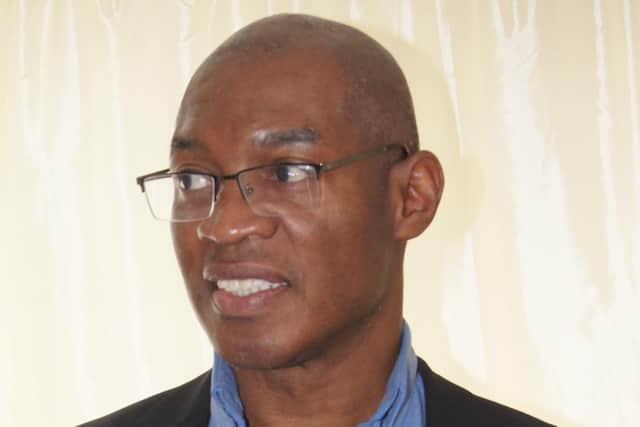
Local Luton policing expert Montell Neufville, who also chairs a regional Bedfordshire, Cambridgeshire and Hertfordshire police scrutiny panel, shares the advice he has been giving to police professional magazines and at police conferences on why police accountability is important.
There has been a lot of talk about the police being accountable to the public.
“In 1829, the then Home Secretary, later Prime Minister Sir Robert Peel, introduced the Peelan principles. In maintaining that these are as relevant today as 200 years ago, I will highlight five of these principles and talk about how relevant they are in today's policing.
Here is a short abbreviated summary of the Peelan principles:

-
To act without fear or favour
-
To maintain public trust and respect
-
Demonstrate impartiality
-
To use physical force only when the use of persuasion, advice and warning is found to be insufficient to secure public cooperation
-
To refrain from usurping the powers of the judiciary by judging guilt and punishing the guilty
These have been incorporated into the police oath and the police Code of Ethics. In 2024 the College of Policing, the body responsible for police training and standards, published its updated review of the code of ethics after consulting with police forces from across the land.
The Code of Ethics is similar to what they have always been but the updated version has an emphasis on a number of key principles.
These are and I quote from the College of Policing;
-
Courage – demonstrating integrity and transparency in our decisions, leading by example and challenging anything that could bring our profession into disrepute.
-
Respect and empathy – listening to and understanding the needs of the public, and trying to recognise and respond to the physical, mental and emotional challenges that both colleagues and members of the public face.
-
Public service – the commitment to work in the public interest, communicate clearly and openly, and take pride in providing an excellent service to the public.
In the UK we have policing by consent. This doesn’t mean that everyone has to agree with everything a police officer does or says.
What it means is police officers have a huge amount of power, they can deprive people of their liberty, use force against people and restrict their movements. We often hear that they make mistakes due to the fact that they are citizens in uniform, however not everyone can become a police officer, some are rejected and some don’t complete the probationary period.
In addition, they are trained on judgement and decision making. They have a requirement to act with honesty and integrity and when force is necessary, use the least amount of force required.
Considering all this, here are the five reasons why accountability and scrutiny are vital tools for modern policing:
Reason 1: It is vital to the building of trust and confidence - It is no secret that there is a public perception problem based on the fact that the police use cohesive powers disproportionately on people who are black and Asian. This is an issue that has been on the agenda as a policing problem for quite some time. With the population overall there is often a feeling that the police are not there when needed and provide a partial service. There is a lack of understanding of what the operating rules are for police officers and a lack of knowledge on what officers can and cannot do.
Reason 2: it demystifies policing - How policing actually works, understand their training, rules of engagement and policing powers. Police officers have to undergo a lot of training before becoming a constable. Once they pass their probationary period there is a lot of ongoing professional development offered and provided, in addition when moving onto specialist departments there is further training needed for that particular department. Every police force has a Professional Standards Department whose job is to ensure that complaints either internal or from members of the public are addressed.
In addition to training and being held to account by their peers, officers are accountable to their supervisors and to the Home Office through inspections. Most police forces have independent scrutiny panels who act as critical friends. Finally the Independent Office of Police Conduct (IOPC) holds the police to account.
Police decision making. Police officers are taught to go through the national decision making model (NDM) when using their powers. This involves the following assessment;
-
Gather intelligence
-
Assess the threat, harm and risk
-
Consider what powers and policies to use
-
Assess the options and the options and alternatives
-
Take action and review what happened
Reason 3: it helps in the fight against crime – Most cops are good cops, some cops are bad cops, bad cops are bad for good cops. Many police officers put themselves in harms way and sometimes in scary situations to help apprehend suspects and to protect people.
Absolutely it is their job, it isn’t a job many other citizens would choose to do. There are many occasions when officers do feel the emotions of the situation, which may cloud their judgement. Understanding the role of the different departments within policing and the role of multi agencies helps to build that trust. This can come from including people from a wide variety of backgrounds within the community scrutiny process.
Reason 4: it will help build more partnerships – Believe it or not the police are not the only part of the criminal justice system whose role is to fight crime, this is also a role that local authorities play a key part in. Councils have enforcement officers, licencing officers and the power o remove licences from premises, trading standards officers, they can pass by-laws, have youth offending teams and social workers and are also responsible for target hardening, gating, making roads safe, removing hazards, street lighting and a whole range of other things. Their role should never be underestimated.
Reason 5: it will help to address the issue of disproportionality – It is a well known fact that if you are black or Asian you are many more times likely to have force used against you or to be stopped and searched than if you are white. This is an uncomfortable reality which most forces do not want to address or to even aim to understand.
Scrutiny panels allow residents to get to grips with the data, to question senior officers and to ask critical questions about fairness in policing and meeting the aims as described by their oath and the college of Policing policies who act with impartiality and not to discriminate or act with prejudice.
Not all disproportionality is about or caused by officers using their powers unfairly or in a way that is unlawful, however through the scrutiny process the reasons must be understood and made known.
Montell Neufville is a well known national police ethics advisor. He provides advice and support to the IOPC as well as the local Professional Standards Department. He is the former chair of the Bedfordshire Police Independent Scrutiny Panel and the current chair of the Bedfordshire, Cambridgeshire and Hertfordshire police scrutiny panel that oversees road police and armed police across the three counties.
Montell has delivered training workshops to police officers as ell as being involved in the recruitment of police officers and police chief constables. His advice and guidance has been shared and endorsed nationally by the college of policing and adapted by forces across the country.