
"I have got nothing to lose and everything to hope for": Luton man's brain tumour shrinks by half in new drug trial

A man from Luton has had his brain tumour shrink to half the size in a matter of weeks after new radioactive drug treatment.
Paul Read, a 62-year-old engineer from Luton, flew to South Korea for work in early December 2023. When the plane landed, he had a very severe headache that he couldn’t shake.
He arrived back in the UK two weeks later and his wife, Pauline, thought he may have had a stroke because his face seemed to have dropped on one side.
He went to the Luton and Dunstable Hospital and a scan revealed a large mass on his brain. Paul was admitted to The National Hospital for Neurology and Neurosurgery in London, where it was confirmed that he had glioblastoma - a very aggressive form of brain cancer.
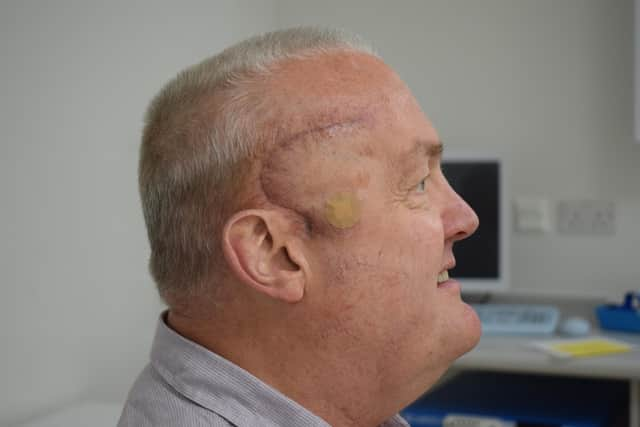

Paul said: “The diagnosis was a huge shock. I’m grateful to the doctors at my local hospital for acting so quickly to get me transferred to Queen Square.”
As much of the diseased tissue as possible was removed during surgery on December 27.
Paul said: “I just felt a bit tired after the surgery. My radiotherapy and chemotherapy started soon after and that made me even more tired.”
At a follow-up scan in July, he was told his tumour had come back.
Paul had registered interest in taking part in clinical trials as soon as he was diagnosed and around this time, a trial for CITADEL-123 was about to open at University College London Hospitals NHS Foundation Trust (UCLH).
He said: “I was fully expecting the tumour to return due to its aggressive nature. I know the outcome isn’t great and I was happy to explore anything else. Even if this treatment works, I imagine that it may still reoccur.”
For the trial, Paul had surgery to insert a device into his scalp that connects to a small tube and has had weekly injections of ATT001, the radioactive drug, put directly into the tumour.
Paul said: “This trial was a lifeline as the likelihood according to the data on survival was a year or less for me and even if it does not directly benefit me, I have the hope that it will feed into the knowledge bank for glioblastoma and other brain cancers and help other sufferers in the future.”
“I have now had six injections, a week apart. I am delighted to be given the opportunity to be part of this trial and I have not experienced any side-effects from the injections. Possibly a little more tired, but overall, I am feeling very good.”
The engineer was the first patient to be recruited to a new clinical trial that has opened at UCLH, and scans revealed a 50 per cent reduction in his tumour at the end of treatment.
He continued: “It will be wonderful if this treatment helps me and if it doesn’t, it doesn’t. I am more than happy, even it if doesn’t benefit me, it may benefit someone else down the line. So I have got nothing to lose and everything to hope for.”
Dr Mulholland, who designed the trial, said: “I’m very pleased that this clinical trial is now open. Potentially this is a very powerful approach and I’m already extremely happy with the results from the first patient.”