
“The way they treat Deaf people is unacceptable and incredibly cruel” Luton woman calls for change after partner’s hospital death

A Deaf woman from Luton has called for change after her partner died days after being left with no interpreter while he was in hospital.
Victoria Page and Dan Reid, who were both Deaf, had struggled to communicate with medical staff from when Dan first collapsed, right up to his death in 2022.
Dan, who was 47 when he died, had suffered a heart attack at the age of 35. In July 2022 he was taken to hospital after collapsing – and Victoria explained how he was left for hours without an interpreter.
She explained: “The nurses refused and said that there was a minimum booking of two weeks before they could get an interpreter. Five days later, Dan died, and I still have questions about what happened.
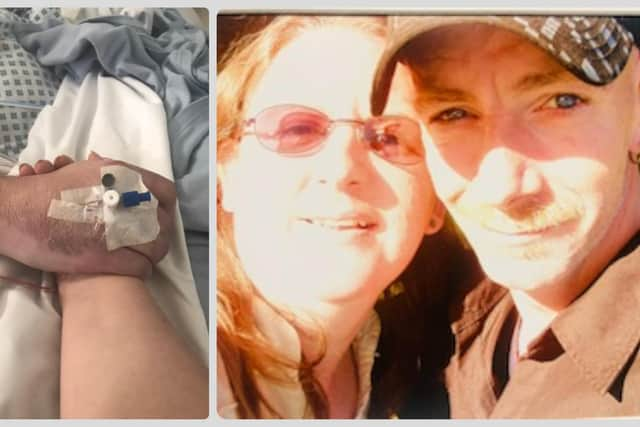

“He was never clear about his treatment and what was happening to him. The nurses were rude, and that was after Dan's death as well. Obviously, these barriers present an ongoing, stressful situation.”
Sarah Stanley, chief nursing director for Bedfordshire, Luton and Milton Keynes Integrated Care Board and senior responsible officer for the Denny Review, apologised to Victoria and sent his deepest condolences, saying: “It is unacceptable that Dan and Victoria were not supported by an interpreter when accessing health and care services.”
For six years, the couple were unaware of the Accessible Information Standard (AIS). This law came into effect in 2016 to make sure people with a disability or sensory loss are given information they can understand.
But Victoria claims they were never told about it or had any medical staff ask about their communication preferences.
She said: “No one should have to fight for access. No one should have to ask for an interpreter. We should be able to get access to healthcare. We should be allowed to have BSL interpreters for communication to get that information, to be able to ask those questions.”
While unwell in the hospital and with nobody to interpret for him, Dan was forced to write down his issues and prompt the staff caring for him to explain medical jargon.
Notes seen by Luton News from his time in the hospital before his death show his frustration as he tries to make sense of his illness and whether any prescribed medication would have an effect on his pre-existing heart condition.
He wrote: “I need you to write down this time because I am getting more stressed. I am worried about what happens next. I need you to be honest. Treat me as a person, don’t see me as Deaf.”
The notes also document turning off Dan’s life support. Victoria wrote: “They removed his breathing tube without asking my permission. I was his next of kin.”
At a meeting on Monday to discuss the the findings of the Denny Review, a study into health inequalities, Victoria also explained how hard the pandemic was, calling it “a very isolating experience”.
The 47-year-old said: “There were no BSL interpreters on the news. Trying to contact the GP, the GP said that we had to contact them by phone. Obviously, as a deaf person, I can't do that.
“And going into the GP surgery, everybody was wearing masks, making lip reading absolutely impossible. So as you can imagine, that affected our mental health. It was a really stressful and isolating place for both of us.”
At the meeting at the Hat Factory Arts Centre, people heard from Pride in Luton, Penrose, Healthwatch Luton and the Luton Roma Trust about what the Denny Review revealed about access to healthcare in the town.
Rev Lloyd Denny, who produced the three-year study for the Bedfordshire, Luton and Milton Keynes Integrated Care Board, said: “The timescale for action is one to five years. The first year or so is when the immediate changes start. But the big, heavy, real system change is between three and five years.”
Sarah Stanley said: “Victoria’s story is one of several that we have heard through the independent Denny Review, published in September last year, which highlights that some people experience barriers to health and care because of language and communication barriers, which can have a detrimental and long-term impact on their health and wellbeing.
“While some lessons were learned from the pandemic, we welcome the feedback from residents and we have asked Healthwatch to lead a review into translation and interpretation services for the ICB, which will report early next year.
“We are committed to responding to feedback and look forward to working with local people, our partners and voluntary, community and social enterprise organisations to make sure that everyone has fair and equal access to health and care services in our area.”
Victoria added: “It's death by 1,000 cuts. I hope his death is able to improve the future of the Deaf community - better access and the right agency. The way they treat Deaf people is unacceptable and incredibly cruel.”