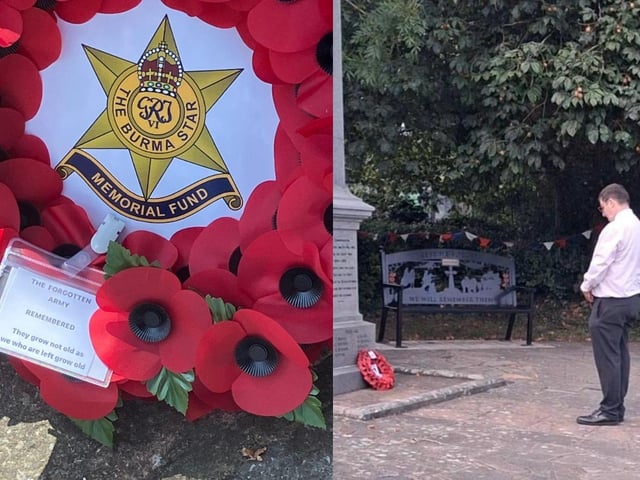


It has been 80 years today (Friday) since the official end of the Second World War when Imperial Japan surrendered on August 15, 1945.
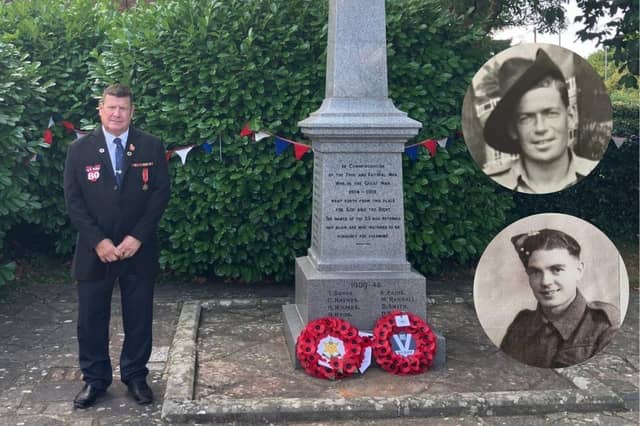
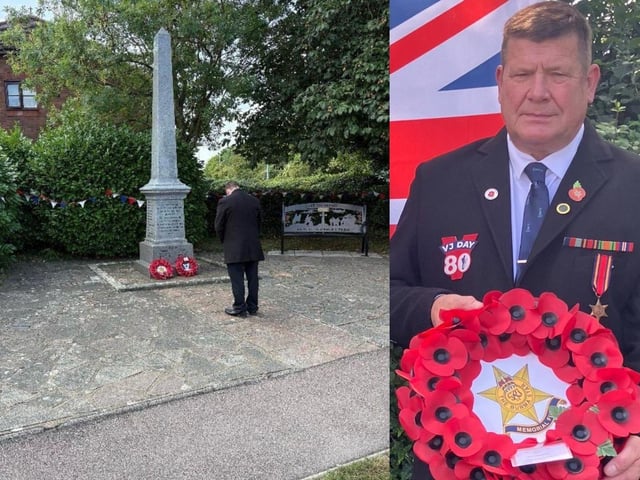
Owen Clark, 67, went to the village’s war memorial to honour both his father and uncle, who served in the army in Burma.
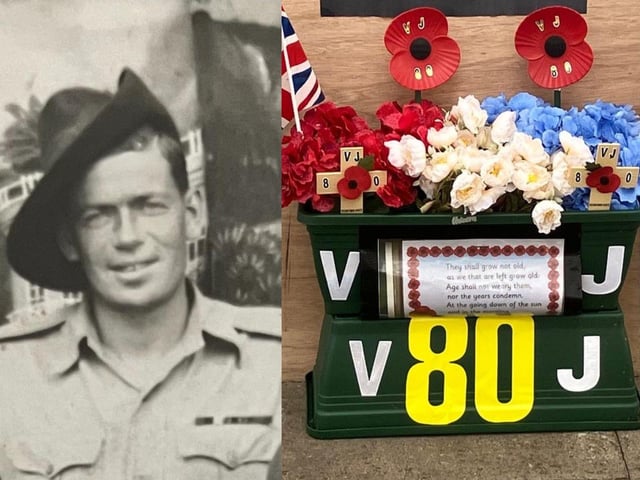
His father, Sergeant Major Ronald Clark, was just 21 years old when he served in the British Army in Burma during the Second World War from 1941 to 1945, in the Bedfordshire and Hertfordshire Regiment.
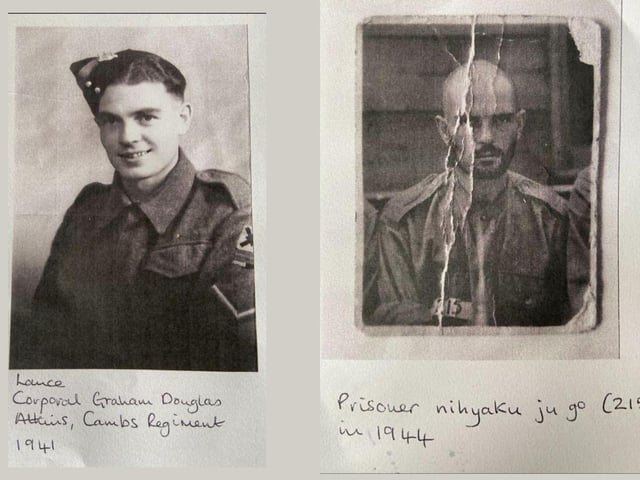
His uncle, Lance Corporal Douglas Atkins, served at the same time but was captured early, spending more than three years as a prisoner of war. During captivity, Douglas worked on the ‘Death Railway’ and the bridge over the River Kwai – dropping to six stone in weight.
Owen explained: “I’ve got two photographs of my uncle — one in 1941, a fit young soldier, and another three years later, where he looks just like a death mask.”
For Owen, making sure their stories are told is very important.
He said: “Nobody talked about it — what they saw and what they experienced was just horrific.
“My dad probably talked more than my uncle, because he didn’t go through the prisoner-of-war camp, but neither of them spoke much about what happened.”
The 80th anniversary in 2025 commemorates eight decades since that historic moment, and shines a light on the ‘Forgotten Army’.
The “Forgotten Army” was the British Fourteenth Army, made up of British, Indian, African, and other Allied troops who fought in Burma against Japan.
They were called “forgotten” because their jungle campaign got little attention compared to Europe. Their victories in Burma cut Japan’s supply lines and helped bring about Japan’s surrender on VJ Day.
Owen added: “The sacrifices and what they endured out there need to be made sure that people are aware of it.
“Anyone who served out there and survived is now over 100 years old. This could be the last major anniversary with anyone still alive who fought there.
“If we don’t talk about these stories, they will be forgotten.”
After the war, Ronald started a successful electrical business in Barton, with Douglas working for him as an electrician. Douglas died in 1991, while Ronald passed away two years later.
Owen thanked the Burma Star Memorial Fund (BSMF) for the wreath and their efforts to make VJ Day just as celebrated as VE Day.
BSMF Director Mark Cann said: “The Burma Campaign, often referred to as the war's 'forgotten campaign,' saw the 14th Army – a diverse force made up of British, Indian, African, and other Commonwealth troops – engage in one of the longest and most arduous campaigns of the entire war.
"Their contributions were critical to the eventual Allied victory, yet they have often been overshadowed by the events in Europe.
"Many endured years of harsh captivity as prisoners of war, facing inhumane treatment and unimaginable suffering. These sacrifices must be honoured with the same reverence as those made on the battlefields of Europe and elsewhere.”
Owen also mentioned George Haynes, a Barton man who died in Burma and whose name appears on the village memorial. He hopes to keep these stories alive for future generations, ensuring the sacrifices made remain part of the community’s memory.
He said: “I try to mention as many people from Barton who served as I can — it’s important that their names are remembered.
“This isn’t about me. I’m just a peg, trying to help keep their memory in place.”
1. VJ Day
Sergeant Major Ronald Clark served in Burma between 1941 and 1945, before returning to Barton. Photo: Owen Clark
2. VJ Day
Lance Corporal Graham 'Douglas' Atkins seen in the first image in 1941 before his deployment to Burma. The second shows him after more than three years living as a prisoner of war. Douglas was forced to work on the ‘Death Railway’ and the Bridge over the River Kwai. Photo: Owen Clark
3. VJ Day
Owen paying his respects, and him with the wreath from the BSMF. Photo: Owen Clark