
Renewable energy storage plans in greenbelt near Luton return to committee after legal challenge
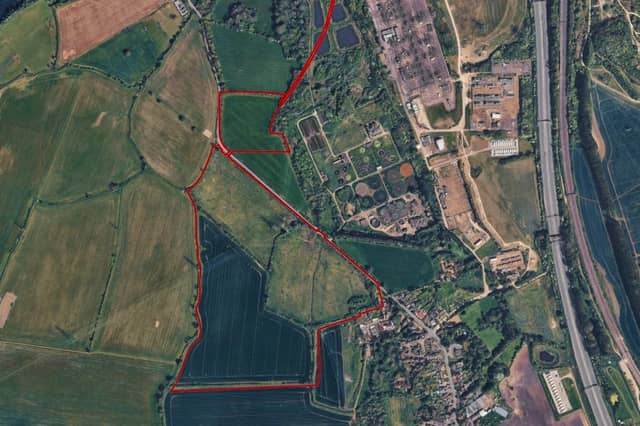

A legal challenge led to plans for a renewable energy scheme in the Bedfordshire greenbelt returning to a planning committee, having been approved in January subject to ministerial agreement.
Statera Energy submitted full plans for a battery energy storage system and infrastructure, with landscaping and other works on 75 acres of land off Luton Road at Chalton.
The Ministry of Housing, Communities and Local Government confirmed last month that the Secretary of State decided not to call in this application, according to a report to Central Bedfordshire Council’s development management committee.
But a letter received in February suggested there’s currently sufficient storage capacity within the region, said the report.
“In the absence of an assessment of ‘regional need’, the council’s decision would be unlawful and the project should return to committee.
“Officers took legal advice and the national planning policy framework (NPPF) doesn’t require an application to show local or regional need.
“This scheme comes back solely to enable members to consider the third party representations on ‘regional need’ and the applicant’s response to them.”
Principal planning officer Ben Borthwick told the committee: “This site is agricultural fields used for arable farming, and is in the greenbelt and open countryside.
“The batteries would be accommodated in 592 modified shipping containers,” he said. “These systems store electricity when energy generated on the national grid is high but demand is low, and release it to the grid in times of high demand or constrained supply.
“Members aren’t redetermining the application afresh. Nothing material has changed since January. It remains inappropriate development in the greenbelt.
“Highways matters are addressed by conditions. The very special circumstances continue to outweigh the harm to the greenbelt.”
Chalton parish councillor Keith Featherstone warned: “This development is both harmful and inappropriate.
“The site attaches directly to the solar farm occupying 111 acres. It creates a single industrial area equivalent to 105 football pitches. This land can’t be returned to its original state.
“Such industrialisation will have a severe and adverse impact. Substantial supporting evidence submitted to CBC shows there’s no regional need for this development.”
The Central Bedfordshire Community Network Toddington councillor Mary Walsh said in a statement: “Chalton is an area which has been besieged by applications relating to renewable energy because of the nearby substation.
“Permissions have been granted for several solar farms and there’s already a battery storage system connected to the substation. The significance of removing best and most versatile agricultural land should also be considered, when addressing the future impacts of climate change.
“This large and dominating structure will consist of shipping containers storing multiple batteries which won’t be disguised by planting, or blend into the background.”
Planning lead for applicant Statera, Chris Palmer explained: “The NPPF doesn’t set out a requirement for such projects to show a local or regional need, and it doesn’t set an upper limit on the number of energy projects which might be consented.
“The overall national policy statement for energy confirms it’s not for the planning system to restrict capacity of different types of energy infrastructure.
“Significant weight should be afforded to the development and the planning officer’s approach to need is correct. On the reference to showing unmet need in greenbelt policy terms, there’s not a requirement to show local or regional need or quantifiable evidence of unmet need.
“The policy interpretation has been correct. On the balancing of the planning and greenbelt policy, the material considerations remain strongly in favour of consent being granted.”
Councillors approved the development, subject to the original planning conditions.