
Luton History: The angry mob and the lasting legacy of the "Old Stocks" on Market Hill, Luton
Joseph was born in May 1814.
May 25th, 1898 saw the passing of Joseph Hawkes, regarded as one of Luton's passionate historians of the past. Even as age crept upon him, his memory and details of bygone Luton were remarkable.
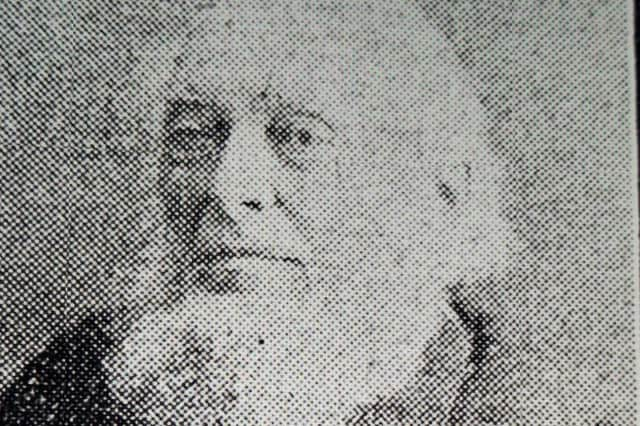

Joseph was born in May 1814. At the age of four he attended Miss Hill's Preparatory School, followed by the Commercial School kept by Mr William Bailey in Church Street, near to the Old Cross Pond in Park Square.
He was a local Wesleyan Methodist for many years. Aged just five years he became connected with the Chapel Street Sunday School. He recalls it was originally held in a cottage beyond the Chequers Inn along Park Street near Mr Burr's farmyard.
Sophia Hawkes, his aunt, was one of the first teachers. She married Mr William Bailey, and in later years their son held the position as Town Clerk of Luton.
Joseph Hawkes possessed a worthy Methodist Ancestry, his Grandfather, Thomas Hawkes, from Ley Green, Hertfordshire, moved to Luton, establishing a building business. He loved music. Surprisingly he played the Clarinet,- it's said that during the summer months he used to ring the 4am bell and practice his Clarinet in the Belfry until it was time for work.
Joseph's father, Thomas Hawkes (the Second), inherited the building business. His Uncle Matthew Hawkes was a working bailiff for Mr J. Gutteridge, a retired wealthy farmer living at "Bank House" Market Hill in the 1820s.
Matthew, also noted as a builder/carpenter, produced the last Pillory (Stocks) situated in the Market Hill area of Luton, including building the "Griffin Inn" at Hog Lane (Chapel Street) from waste materials dis-guarded from the Old Windsor Palace, purchased at auction by Mr Gutteridge.
Joseph, a collector of memories and accounts of Luton's bygone era, one in particular related to his Uncle Matthew's Old Stocks on Market Hill.
In 1810, an eyewitness stated, a man was placed in the "Pillory" for one hour. As the crowds formed, ten special constables were posted, surrounding the convict.
The Red Lion Inn opposite was packed with spectators, rotten eggs in abundance, and similar rotten missiles were thrown from inside the Inn at the prisoner locked in the Stocks. However, the the crowd outside were not convinced of the convict's guilt, the mob angrily demanding a full and fair trial for the prisoner.
Suddenly, the mob immediately broke into a fury against those hiding inside the Red Lion Inn. The crowd retaliated with such force, throwing stones and bricks plus every form of ammunition available, smashing every window of the Inn. Afterwards, without remorse, the angry mob made a rapid escape, leaving a "Lasting Legacy" of Luton's Old Stocks, - Never to be used again.
On a happier theme, Joseph recalls the first stone pavement laid in Luton, starting from the office of Mr Williamson (The Magistrate Clerk) at the corner of Williamson Street, stretching along the same side of George Street to the top of Church Street, spreading to the other side from the top of Church Street to St Mary's Parish Church gates.
Just a few of Joseph Hawkes' "Memory Sketches of Luton".