
Opinion: JPS Police Officers - Doing fair policing despite the noise
The JPS scrutiny panel, which has been operating since 2021, has helped improve understanding on both sides.
By Montell Neufville, Police Ethics Advisor.


Despite politicians such as the Conservative leader Kemi Badenoch calling for unfair and partial policing, treating certain communities differently, across Bedfordshire Cambridgeshire and Hertfordshire many police officers go about their jobs in a calm professional manner despite all the noise and political interference.
The relationship between police and the public is central to effective policing. In the wake of recent debates about police use of force and particularly the role of race and ethnicity in public discussion, where the unfortunate incident in Southampton was used to call for a dismantling of police guidance, lets look at the Joint Protective Services police unit of armed police, roads police and the dogs unit covering Bedfordshire, Cambridgeshire and Hertfordshire, which is overseen for accountability purposes by an independent scrutiny panel.
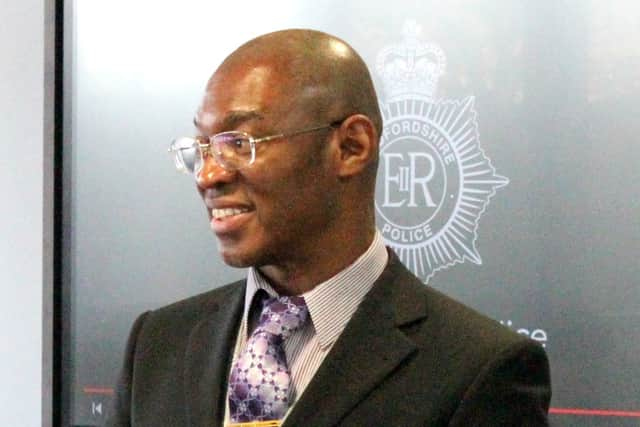
The police unit gets its officers from the three county police forces and acts as a county wide support force. This model may be regarded as a blueprint as the government considers the merging of police forces.
Not only should officers do the right thing, they should be seen to do the right thing in line with their code of ethics. Trust and confidence in policing happens with every interaction that officers do on a daily basis, it isn’t just the job of a specialist team or a particular unit. Its every single officers job.
Trust in policing comes from fair interactions and for officers who are open, accountable for their actions and demonstrate a willingness to listen. Independent scrutiny is therefore not an optional extra. It is an essential part of a healthy police service.
One of the most effective ways to strengthen that relationship is through scrutiny panels such as the Joint Protective Services (JPS) scrutiny panel. Managed by Att10tive. By allowing independent panel members to examine how police powers are used, the panel provides an important safeguard that benefits both the police and the public.
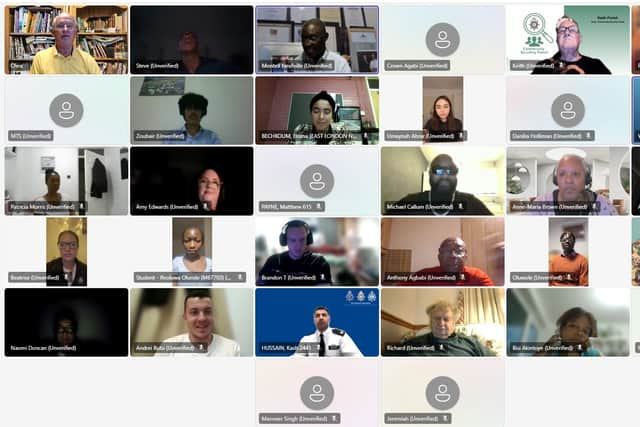
When senior officers engage with scrutiny panels, they open themselves to constructive challenge and valuable feedback. These discussions create space for community concerns and lived experiences to be heard directly by those responsible for strategic decision-making.
For police, this is an opportunity to explain the complexity of their work, test their policies and ensure their actions reflect public expectations. For communities, it offers reassurance that the service is willing to reflect, adapt and improve.
A key part of the panel’s work is the use of the PLANTER framework, which helps assess whether force has been used fairly, ethically and lawfully. PLANTER stands for proportionate, length of time, actions, necessary, type of force, ethical and reasonable. It provides a clear structure for assessing whether an officer’s response was appropriate in the circumstances.
Alongside PLANTER the scrutiny panel also uses a traffic-light rating system, providing feedback ranging from green 1 to red 9. Green 1 indicates outstanding policing or conduct that fully meets expectations. Green 2 and 3 reflect actions that are understandable, with only minor feedback needed, such as around language or communication. Amber and red ratings indicate increasing concern.
At the panel’s most recent meeting in June 2026, four videos of police use of force were reviewed. The scrutiny panel rated three of the videos green 1 and one was rated green 2. The green 2 was due to the armed police officer having the right grounds to use force, it was proportionate and necessary, meeting the PLANTER test however his language could have escalated rather than de escalate the situation.
The cases are selected according to pre-agreed criteria with the panel chair, monitoring on this occasion the use of tasers, dog deployments, handcuffing and incidents involving children. The panel sets out the criteria of which to carry out random sampling.
The panel also looks at the police data to satisfy itself that officers are using their powers fairly. Just as importantly, senior officers are able to see where standards are strong and where improvements may still be needed.
The JPS scrutiny panel, which has been operating since 2021, has helped improve understanding on both sides. Local people from different backgrounds and age groups have had the chance to see police work more closely, while officers have benefited from informed challenge and community insight.
The panel has also increased public awareness of police culture, the pressures officers face and the environments in which they work. Equally important, panel members are able to see what action is taken after feedback is given.
The panel is now regarded by many as a model of good practice. Its strength lies in the diversity of its membership, the methods it uses, the professionalism of its discussions and the mutual respect between police and panel members.
When senior officers listen to scrutiny panels and act on their advice, the benefits are tangible. Mistakes can be reduced, policies refined and public confidence strengthened. More importantly, communities can see that their concerns are being taken seriously and used to drive change.
This is what real accountability looks like: independent scrutiny, honest dialogue and a shared commitment to improvement. Policing should never be an isolated institution. It must remain closely connected to the communities it serves.
By supporting transparency and independent review, the police are are not only correcting mistakes. They are helping to build a safer, fairer and more cohesive society in which trust is earned and maintained every day.
Montell Neufville is Managing Director of Att10tive Social Enterprise, the independent organisation managing the JPS community scrutiny panel.
Follow us on social media and YouTube #Att10tive