
OPINION: Tackling knife crime in Luton needs a whole-community approach
Knife crime is not a problem that can be solved in isolation, nor can it be policed out of existence.
In Luton, tackling youth violence demands a genuine whole-community strategy—one that recognises the complex web of social factors driving young people to carry weapons. While enforcement will always have a place in public safety, true impact comes from early intervention before a child ever considers picking up a knife or offensive weapon.
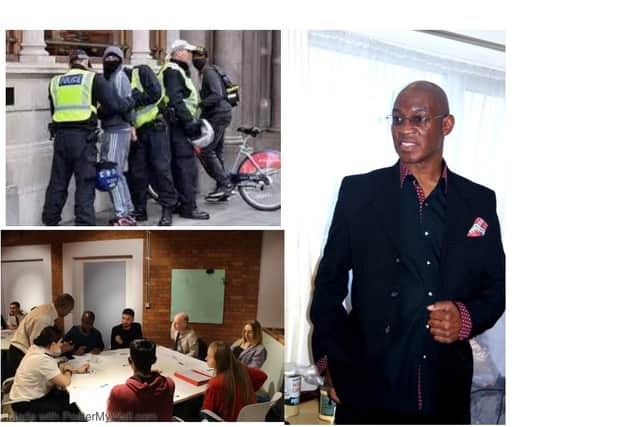
Through prevention workshops across local primary schools, secondary schools, and colleges, Att10tive Social Enterprise sees a clear pattern: the age to support kids gets lower and lower. Children as young as primary school age are at risk of being exploited. Delivering early intervention at this critical juncture is essential for building resilience before negative influences take hold.
Insights from Att10tive
"If we want to stop youth violence, we have to meet young people where they are, long before they reach a crisis point. Prevention isn't about giving lectures; it's about giving young people the tools, confidence, and critical thinking skills to make safe choices when they feel pressured. Our interactive sessions, including the Taking The Right Path and Solutions workshops, provide age appropriate safe, open spaces for honest dialogue and learning.
Students regularly share powerful realisations during these sessions, with comments like, "I never realised how easily it was to make a decision and choice that ruins your whole future," and "The scenarios showed us that walking away isn't weak, it's actually taking control of your own life." Feedback like this highlights the transformational shift that occurs when young people are empowered rather than preached to.
The Six-Pillar Whole-Community Strategy
To turn the tide on youth violence, every sector of the community must play a coordinated role:

Parental Responsibility: Parents and carers are the first line of defence. Empowering families with the confidence to spot early indicators of exploitation—such as subtle behavioural shifts, unexplained items, or missing hours—is vital. Open, non-judgmental dialogue at home helps strip away the stigma around asking for help.
The Role of Schools and Colleges: Educational institutions provide the most consistent environment for early intervention. Rather than treating knife crime purely as a disciplinary issue, schools should bring in outside exerts and embed interactive, trauma-informed safety education that teaches practical conflict resolution, emotional regulation, and decision-making skills. They should mandate all students to undergo workshops and assemblies.
Charities, CICs, and Community Groups: Grassroots organisations act as the vital bridge between young people and formal institutions. Local initiatives build trust through relational youth work, peer-led mentoring, and relatable delivery that statutory services often struggle to replicate.
Local Authorities: Councils hold the structural keys through youth services, social care, housing, and influencing over a wide range of statutory and volunteer organisations. They also have a role in coordinating solutions, binging people together. Ensuring public spaces feel safe and keeping early-help youth hubs accessible are fundamental duties of local governance.
The Police: The police do have an enforcement role. When one or more than one young person is visibly confronting someone with weapons then this is clearly a policing job. Before that the police have an important educational role to support CIC’s in their delivery. Building positive, trust-based interactions with young people reduces the fear that often drives defensive weapon-carrying. Bedfordshire police has always been very supportive in this area.
Funding Bodies: The wider funding landscape requires a strategic shift. While reactive funding for post-conviction rehabilitation is necessary, the majority of resources must be directed upstream to universal and early intervention. Supporting children who have not yet entered the justice system offers the highest long-term return for community safety.
Recommendations
Drawing from the research of the Youth Endowment Fund (YEF) and the practical success of Att10tive's Taking The Right Path workshops, the following evidence-backed recommendations offer a roadmap for local strategy:
Prioritise Interactive, Skill-Based Workshops Over Fear Tactics: Research consistently shows that scare tactics or graphic presentations rarely deter young people. Workshops like our Taking The Right Path demonstrate that scenario-based workshops, role-play, and peer dialogue equip young people with real-world refusal skills and safe exit strategies.
Earlier support workshops for Younger Kids: Early intervention must catch children during key developmental shifts. Delivering targeted safety workshops during Years 5, 6, and 7 prepares students for the social pressures of secondary school before risky behaviours emerge. The next workshops are for years 8 and 9 then the third category are for years 10 to 13.
Expand Family Support Networks: Engaging the wider family unit significantly improves outcomes for young people. Local strategies should fund accessible, non-judgmental parental workshops
Establish Multi-Agency Partnerships: Local authorities, schools, police, and community organisations should be facilitated to come together n a regular basis to share tools and methods for early intervention. Currently there are few resources that are shared and there isn’t a organised formal way that a school can go to one place and say to the powers that be ‘can you help support us, we don’t have the skills or the experience’
It is important to ensure support reaches a child long before police involvement becomes necessary.
Protecting Luton's young people requires shifting from reactive crisis management to proactive community investment. By prioritising primary prevention and equipping young people with self-belief and practical life skills, we can create an environment where every child feels safe without ever needing a weapon.”
Montell Neufville is the Managing Director of Att10tive which has been delivering workshops across Bedfordshire for many years, he is also the founder of Bedfordshire stop & search scrutiny panel and now chairs a scrutiny panel covering the three counties of Bedfordshire Cambridgeshire and Hertfordshire.
Follow Att10tive on YouTube LinkedIn and Instagram. Visit Att10tive.com website