
Tree-mendous! 2,000th tree planted at Linmere
A major green milestone has been reached at Linmere as, spade in hand, Alex Mayer MP planted the 2,000th new tree at the growing community.
The small-leaved lime tree was chosen to reflect the area’s historic name. The name Linmere comes from ‘Linmear’ which appears on a 1762 map of the area and means field of lime trees.
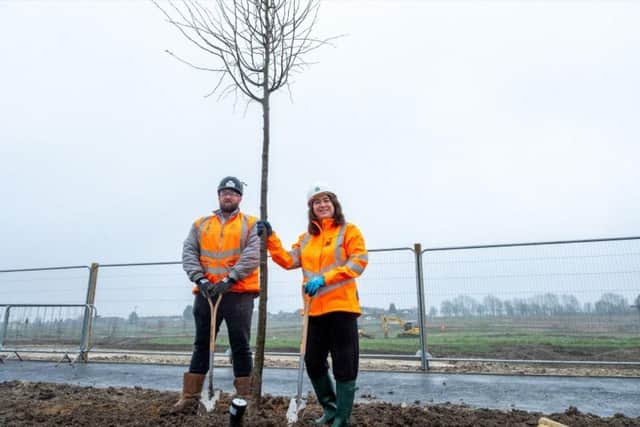

The local MP, who recently led a Parliamentary debate on Britain’s young trees, was shown the tree irrigation system that is installed alongside the new trees. This helps them to thrive.
In her Commons debate Ms Mayer highlighted that planting trees without proper aftercare “simply doesn’t work”. Nationwide around one in four new trees die within 12 months
By contrast, the Linmere development in Houghton Regis is gaining plaudits for its high success rates. More than 90% of trees planted at Linmere have survived.
Sam Smith, who leads the planting programme at Linmere, said the development’s success is rooted in careful species selection and rigorous maintenance. Twenty‑four native and climate‑resilient species suited to Bedfordshire’s soil have been chosen. There is a strong emphasis on soil preparation and regular watering during the crucial first year.
Ms Mayer said: “It’s fabulous to be planting this lime tree but that’s only half the story. True success isn’t just planting, it’s surviving and thriving. I’m proud that this tree and its 1,999 friends have some of the best chances of making into adulthood in the region. Linmere shows what can be achieved when we choose the right trees and look after them properly. That’s vital if we’re going to create a greener, cleaner environment. And it’s more cost effective too.”
Emma Farrier, Community Marketing Manager for Linmere, said: “Creating a green environment to provide resident access to outdoor spaces, is a fundamental ambition of the Linmere project. Our tree planting strategy is carefully considered, using native, climate-resilient species, that also provide essential nutrients to encourage a thriving ecosystem for our native wildlife, such as birds, bats and insects."