
The Poor Laws: The More Things Change…


The More Things Change… the more they stay the same — or so it seems! After a delicious lunch at Tilsworth Golf Centre last Monday — probably more in one meal than many poor people had in a week during Tudor times — members of the Dunstable Probus Club were entertained by historian Tony Smith.
His talk, “The Poor in Dunstable and Luton,” turned what sounded like a dry history lesson into an engaging journey through the ups and downs of Britain’s early welfare system.
Tony began by setting the scene in Tudor England, when helping the poor was left mainly to kind neighbours and the church. When Henry VIII closed the monasteries, thousands suddenly lost their support. To fill the gap, the Elizabethan Poor Law of 1601 was introduced, making each parish responsible for its own poor. Locals paid a “poor rate” tax to fund relief — the first organised attempt at welfare, though hardly a generous one. Applicants had to be “settled” — residents for at least 40 days — which led to plenty of arguments, evictions, and creative interpretations of the calendar!
The 1723 Workhouse Test Act enabled parishes to set up workhouses to deter all but the most desperate. Some parishes, Tony explained, mixed the system: the “deserving” poor, like the elderly or chronically ill, might get help at home, while the “undeserving” able-bodied were sent to the workhouse. Dunstable and Luton both had early examples — at what later became St Mary’s Hospital in Luton and at The Star in High Street South, Dunstable.
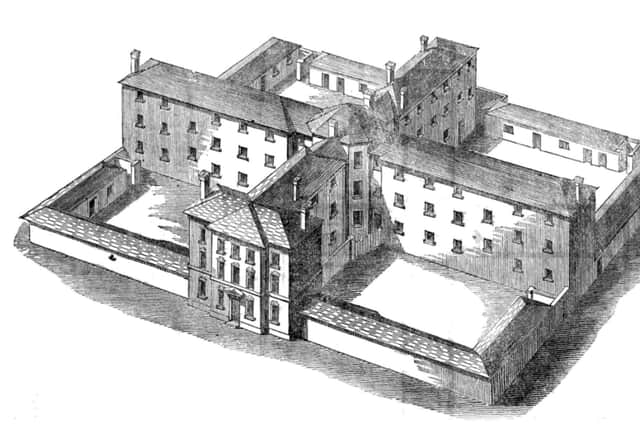
The 1834 Poor Law Amendment Act marked the next big change. Its aim was to cut costs and discourage dependency by insisting that relief only be given in workhouses — grim places with bland food, endless work, and rules strict enough to make even the keenest bureaucrat blush. Alan’s vivid descriptions made it easy to see why people would rather starve than enter.
There was even a north-south divide then — but in reverse! Industrial towns like Todmorden in West Yorkshire were thriving and didn’t need a workhouse until the 1870s.
Tony wrapped up with a smile, saying, “The only thing you learn from history is that you don’t learn anything from history.” Judging by the laughter and varied questions, he might just be right! Graham Smith rounded off the meeting with a vote of thanks and applause from all.
Dunstable PROBUS Club meets on the second Monday of the month at Tilsworth Golf Centre and membership is open to retired or semi-retired professional and business women and men. The Club’s main purpose is the promotion of good fellowship and you would be very welcome to come along - please contact us on 01582 608242. The next meeting will be held on Monday 10th November 2025 when lunch will be followed by the annual music quiz, hosted by John Matthews.