
Luton Sixth Form College: A brief history
On Thursday, August 22, young people from across Luton celebrated receiving their GCSE results. Many of these individuals will be looking forward to beginning their A level studies at Luton Sixth Form College next month. However, relatively few will be aware of the rich history of the site.
Luton Council acquired the Modern School in 1904, which was at the time a mixed-sex secondary school. This establishment moved into new buildings in Park Square in 1908, where the University of Bedfordshire stands today.
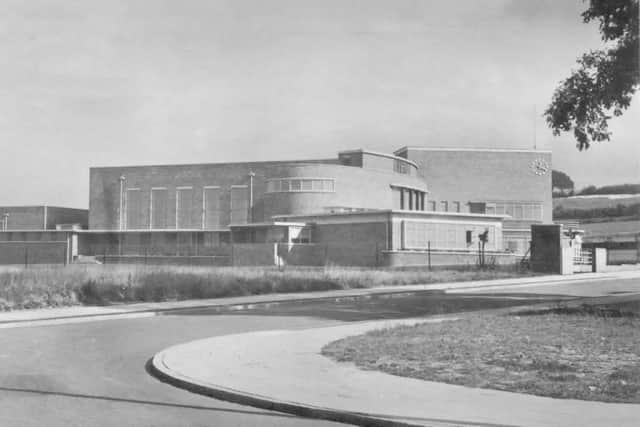
In 1938, the college shown here was built on the north side of Bradgers Hill Road as the new site for Luton Modern School. At that time, the school was on the northern edge of the developed area of Luton, with open countryside beyond.
The school became Luton Grammar School for Boys in 1944 after the passing of that year’s Bulter Education Act. Then, in 1966, Luton Grammar School became the first Sixth Form College in the UK, drawing together the Sixth Forms from the three selective schools in Luton. Many of the staff from the previous sixth forms, as well as the libraries, moved to the current site. This change was made possible thanks to the town becoming a County Borough in 1964 and gaining greater autonomy over its schools.

Those joining the college this year will be walking in the footsteps of some notable former pupils including Hollywood composer David Arnold, actor Colin Salmon, TV chef Nadiya Hussain, and Luton South MP Rachel Hopkins.
However, the building that this year’s cohort will be walking onto in September will look very different to the school shown in the adjacent image.
The establishment was completely rebuilt between 2008 and 2011 to provide comprehensive new learning and sports facilities in a ‘compact clustered layout’. The phased construction allowed the college to continue operating on the same site while the new facilities were built.
A central hub administration block, visible from outside and wrapped by a double height atrium, now sits at the heart of the college, whilst spacious ‘streets’ lead to five distinct departmental teaching wings, refectory, café and indoor sports hall.
Despite these cosmetic changes, Luton Sixth Form College retains its reputation as one of the top performing colleges in the UK.