
Name chosen for new apple variety discovered growing in Luton garden
Clarendon Blush pipped others to the post after a public vote to find a name for a new apple variety found growing in a Luton garden.
The apple was found growing in Clarendon Road, where a tree, believed to be between 70 and 90 years old, has been producing fruit for decades.
DNA testing carried out in December 2025 confirmed it produced a previously unidentified cultivar, with Luton Orchards drawing up a shortlist of names for the new apple.
Five possible names for the new variety were put forward with people asked to vote and rank the names in order of preference.
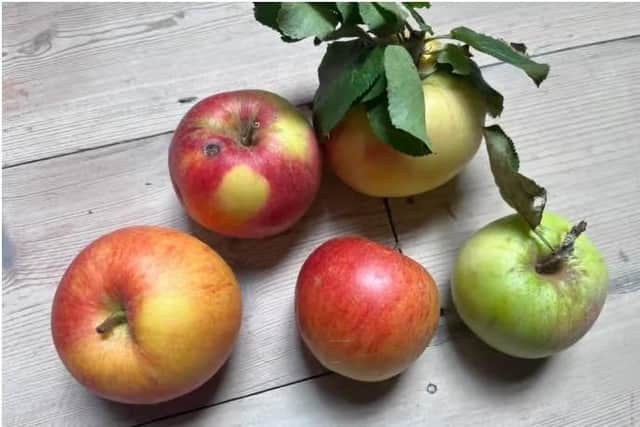

The organisation said the proposed names reflect where the apple was discovered, its appearance and its likely parent varieties.
The results indicated a clear favourite of Clarendon Blush, which will now be submitted to the Register of Local Cultivars – with fingers crossed it will be accepted.
The results were sorted by average position as follows:
Clarendon Blush: 300 times top spot, average 2.2
Clarendon Wonder: 100 times top spot, average 2.7
High Town Beauty: 111 times top spot, average 3.0
Luton Wonder: 195 times top spot, average 3.0
Clarendon Seedling: 16 times top spot, average 4.0.
A spokesperson for Luton Orchards stated: “The suggested names were displayed in a random order, which participants could sort in order of preference. The results indicated a clear favourite of Clarendon Blush.
"We also had 327 comments and alternative name suggestions. We're still crunching the data, and will display some favourite comments shortly.”
The tree is believed to have originated as a “chance seedling”, meaning it may have grown naturally from a seed produced by another apple tree, rather than being deliberately bred.
The probable parent trees have been identified as two 19th-century varieties: Newton Wonder and James Grieve.
The early-season apple is s a dual-purpose variety, meaning it can be eaten fresh or used for cooking and is described as lemon-yellow, with a red and orange flush.
Researchers have been unable to establish who planted it or why, but a historic Ordnance Survey map also shows fruit trees were once common around the site.