
Flats in former Luton office block must be demolished

Flats at a former office block will have to be demolished, after they were built without planning permission, the Planning Inspectorate has ruled.
Shire House, at 400 Dallow Road, was converted into 109 residential flats in 2019 by owners Devonhurst Investments Limited.
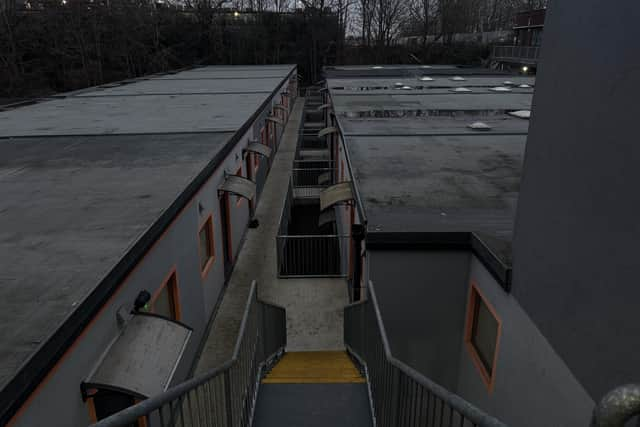

Luton Borough Council issued a planning enforcement notice in February 2022 to stop the use of the flats and reverse the changes, saying the structures “did not have adequate access to natural light and ventilation”.
The owner applied to the High Court to quash the notice, claiming the council had made mistakes when making its decision to issue it.
In 2023, the High Court heard the case and ruled in the council’s favour, with all claims against the council dismissed.
Devonhurst Investments Limited appealed the enforcement notice, and the Planning Inspectorate Inquiry was heard in the council chambers in January.
The Planning Inspector, Andy Harwood, ruled that the central blocks, around 28 units, should be demolished.
He said: “...the removal of blocks ‘B’ and ‘C’ would create a courtyard within the development. This would make the development overall substantially different. Opening this space up would create a very different context for the flats providing a more welcoming and significantly less intimidating environment.
“It would provide external space for children to play close to where they live, allowing Appeal Decision APP/B0230/C/22/3296488 for people to sit outside within a landscaped area.”
A spokesperson for Luton Borough Council said: “The inspector’s decision represents a partial outcome for both sides. While planning permission has been granted for the change of use of the site and the retention of 81 residential units, permission was refused for two buildings that were found to provide wholly unacceptable living conditions. These blocks – around 28 units – must now be demolished within 17 months.
“It strikes a difficult balance – removing the worst aspects of the accommodation while safeguarding families who have made this place their home. The decision is positive for the council in that it empowers us through the use of planning conditions to bring those homes that are currently deemed unsatisfactory for accommodation, up to an acceptable standard. The decision also allows 30% of these homes, once upgraded, to be used as affordable housing for the council to use.”
Andy Harwood said: “The improvements in these terms would, I feel, also therefore lead to an environment where people from different households would be more likely to enjoy being outside of their own homes, particularly in good weather and would socialise more with one another.
“These factors would make a considerable difference to how it would feel to live here and the sense of community cohesion.”
At the inquiry in January, tenants were also given the chance to explain their experience of Shire House.
Naima Stitou, a mother of two living in the flats since 2020, told the Inquiry that the accommodation was an "unhealthy, unwelcoming environment”.
She said: “The building itself feels more like a prison, which has directly impacted my mental wellbeing. Living with constant damage and darkness starting in the first winter of 2020, my windows have been black with mould. Despite the repair, the condition worsened.
“My family were placed in this flat by Harrow Council after facing homelessness and domestic violence. The whole point was that we would be given safe housing, but the reality of living in this building has only caused me trauma.”
The council added: “We are currently reviewing and digesting the decision to ensure we can support the residents affected. Luton Council reaffirms its commitment to protecting residents from substandard housing and unlawful developments. Good quality accommodation is a basic right, and it is essential that all landlords in our town act responsibly and meet the standards our residents deserve and we will continue to take firm action against those who compromise the safety, wellbeing, and rights of our communities.”
A statement from Devonhurst said: “The inspector has upheld a solution, which was previously offered by Devonhurst some time ago, entailing the retention of 81 flats and the creation of an internal courtyard replacing 28 of the flats over a more manageable period, for all those affected, of 17 months.
“The inspector criticised various aspects of the council’s actions, including refusing to agree various matters with the appellant, not making senior officers available for cross-examination at the inquiry and causing the adjournment of a previous hearing.
“It was disappointing to note that the council could have accepted the same proposed solution some time ago which would have saved public funds, avoided wasted costs and prevented unnecessary stress for the occupiers and all parties involved.