
Gbenga finds his voice in the Rhythms of African Heritage at ILU (Drums)
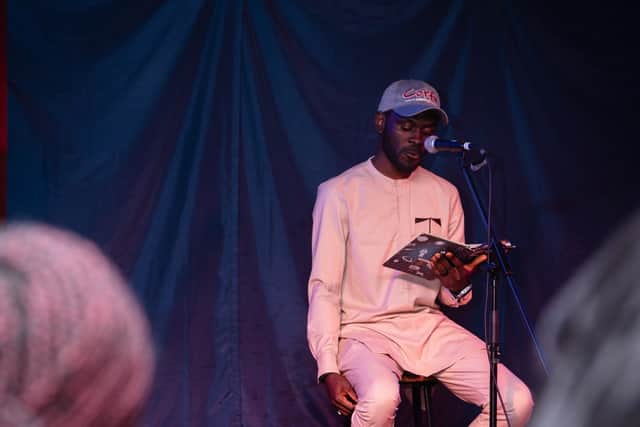
When spoken word meets the pulse of the African drum, the stage becomes a meeting point between language, music and memory. At ILU (Drums), held at Bushmead Community Hub in Luton on Sunday, 6 September 2026, spoken-word performer Olugbenga Fayehun, popularly known as Gbenga, brought the spoken voice into a cultural programme exploring the relationship between African performance and oral tradition.

Presented by Iam Kornerstone in collaboration with AbuleTic, the event ran under the theme “A Theatrical Expression of African Talking drums, music, poetry and folktale”. Its programme brought together talking drums, percussion, music, poetry, folktales and proverbs, placing different forms of artistic expression within a shared celebration of African cultural heritage.
Gbenga's performance offered a different texture to a programme shaped by rhythm and percussion. Where the drum communicates through patterns of sound, spoken word draws its force from language, vocal expression and the performer's ability to hold an audience's attention. The two forms may differ in technique, but both depend on timing, presence and the careful control of pauses and emphasis.
A compelling spoken-word performance requires more than the delivery of carefully arranged sentences. It demands an understanding of pace, tone and the emotional weight of language. The performer must know when to build intensity, when to allow a pause to settle and when to bring a line into sharper focus.
Gbenga's stage presence was confident and conversational, drawing listeners into the rhythm of his words. His opening allowed the language to establish its own atmosphere before the delivery gradually gathered momentum. Such an approach suits the setting of ILU (Drums), where the spoken voice existed alongside musical and percussive traditions. Gbenga’s poetry established its own rhythm, creating moments of contrast between the energy of the drums and the intimacy of a performer addressing an audience directly.
The response was one of attentive listening, with moments of recognition and appreciation as the performance developed. Whether through a knowing smile, a nod of agreement or applause following a particularly resonant passage, audience engagement became part of the exchange between Gbenga and the audience.
The broader significance of Gbenga's appearance lies in the relationship between spoken word and the oral traditions that informed the event's programme.
Spoken word belongs to a contemporary performance landscape, yet it shares with these traditions an emphasis on the voice as a vehicle for expression. A poem can preserve a personal memory, question an established idea or give language to experiences shared by a wider community. In live performance, the meaning is shaped not only by the text but also by the artist's interpretation and the audience's response.
This connection gave Gbenga's place on the programme particular relevance. His contribution brought poetry into a setting where rhythm and storytelling were central to the event's identity, demonstrating how contemporary artistic forms can participate in conversations about cultural inheritance without having to reproduce traditional practices exactly.
One of the strengths of a multidisciplinary programme is its potential to reveal connections between art forms that audiences might ordinarily encounter separately. At ILU (Drums), percussion, poetry, music, folktales and proverbs were brought together under a common cultural theme.