
Could space technology help Luton prepare for wildfires?
With more than 1,000 wildfires recorded in the UK so far this year, including a spike in outdoor grass fires around Luton, engineers at Leonardo are developing technology that could one day help to predict dangerous fire conditions before the first flame appears.
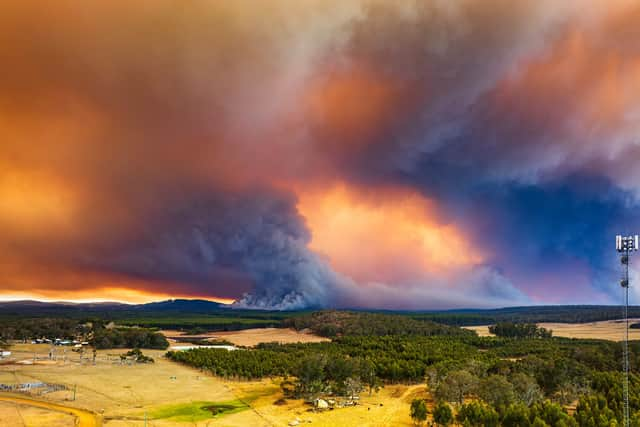

Led by the Australian National University, the OzFuel programme will use SAPHIRA detectors to measure subtle chemical changes within vegetation, including moisture levels and combustible plant compounds that influence how easily forests can burn. The information will help emergency planners identify high-risk areas and position resources before fires ignite.
Leonardo's SAPHIRA infrared detector is at the heart of Australia's pioneering OzFuel space mission, a satellite programme designed to identify areas at greatest risk of bushfire long before a blaze begins.
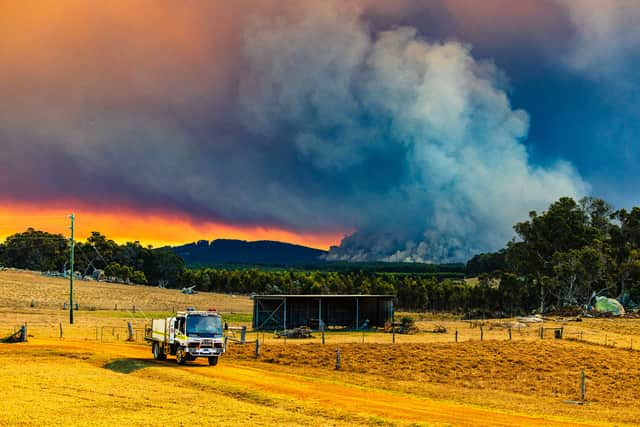
This summer's wildfires have caused widespread destruction which has intensified with massive recent outbreaks engulfing hundreds of hectares across Dunwich Heath, South Wales, and the Isle of Wight. Thousands of miles away, Australian scientists are preparing to launch a satellite carrying Southampton-developed technology specifically designed to monitor forest flammability from space.
Before helping monitor wildfire risk on Earth, SAPHIRA detectors developed in Southampton were used in astronomical research that contributed to Nobel Prize-winning discoveries about the supermassive black hole at the centre of the Milky Way. The detector's extraordinary sensitivity enabled scientists to observe and track stars orbiting the black hole, research that contributed to the 2020 Nobel Prize in Physics.
Today, the same technology is being adapted for an entirely different purpose: helping scientists understand which forests are becoming tinderboxes before disaster strikes. Rather than simply photographing landscapes, SAPHIRA can analyse vegetation in the short-wave infrared spectrum, providing insight into the underlying chemistry of forests and allowing scientists to assess changing fire risks across vast areas.
In June this year, the OzFuel programme completed a major demonstration milestone and is being developed to support bushfire prevention, detection, mitigation and resilience efforts across Australia.
Matthew Hicks, space detector specialist at Leonardo UK, said: "SAPHIRA was originally developed to help scientists answer some of the biggest questions in astronomy, including research linked to Nobel Prize-winning discoveries. It's exciting to see the same Southampton-developed technology now being adapted to help tackle real-world environmental challenges."
The ability to analyse vegetation in such detail from space could provide valuable information to support proactive fire management and help authorities understand changing landscapes before fires take hold.”
Leonardo has had a presence in Luton since 2003.