
ILU: When the drum becomes theatre, memory and living culture
On Sunday, September 6th, 2026, the Bushmead Community Hub in Luton hosted a gathering for rhythm, storytelling and African cultural expression with Olubunmi Samuel Adebisi, commonly referred to as IamKornerstone. He presented ILU, a theatrical performance based on talking drums, percussion, music, poetry, folktales and proverbs. The event was produced by Abuletic and Kornerstone, a percussionist and cultural performer residing in Luton. In this production, Kornerstone portrayed the drum as a storyteller rather than just a musical instrument. The program featured musicians, poets, actors and performers including Temi Commic, Debola Akran, Dayo Sax, Hurlarstringz, Erioro, Gbenga Fayehun, Adeyinka Akinremi, Irene Agbo, MC Crown, Abuletic and Daniel, among others.
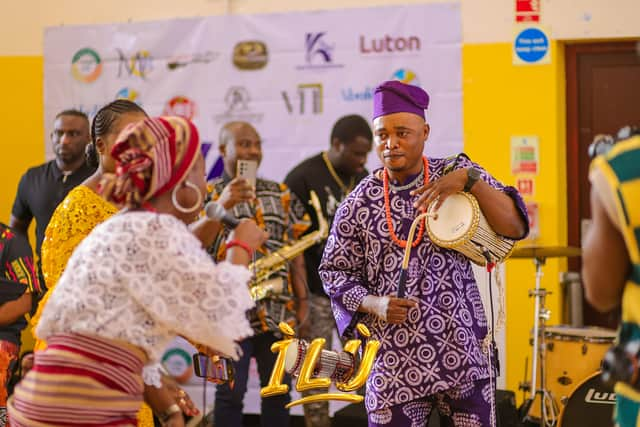

As a result, the producers created an ambitious presentation of African heritage within a contemporary performance context. One of the most unique aspects of ILU is that it intentionally merged music with storytelling. The program recognised something basic about many African performance traditions: rhythm has never existed independently. The drum may announce, respond, celebrate, warn, accompany a story and establish an environment in which words take on an additional level of meaning. Kornerstone understands this relationship. As a talking drummer and percussionist, his artistic process is founded upon an instrument capable of operating both musically and theatrically. His work indicates that the talking drum may operate similarly to a character within a performance, using rhythm to communicate with the human voice. This is where ILU found its strongest creative proposition. Instead of portraying African culture as a museum display of traditional artefacts and clothing, the event demonstrated cultural knowledge through live performance. Proverbs could serve as dramatic material. Folktales could be used as structural frameworks for theatrical performances. Poetry could respond to percussion. Music could be used as a means of telling a story. This multidisciplinary approach is particularly relevant to the contemporary British African arts community.
The organisers described ILU as a theatrical expression of African culture, featuring talking drums, percussion, music, poetry, folktales and proverbs at its core. This combination suggests a type of art that falls somewhere between a concert and a theatrical production. It exists somewhere between these two forms and creates an artistic vocabulary in which sound and storytelling share equal responsibility.
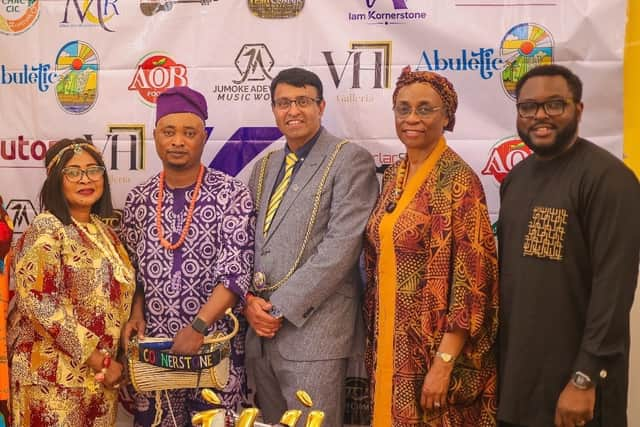
The event was well attended and attracted a distinguished gathering of civic and community leaders, including the Mayor of Luton, Councillor Javed Hussain, Cllr Maria Lovell MBE, Cllr Babatunde Ajisola of Northwell Ward, Luton, and Cllr Jacqui Burnett MCMI, Chair of the Bedfordshire Fire and Rescue Authority. Their presence added a strong sense of civic recognition to the occasion, while further highlighting the importance of cultural events such as ILU in bringing communities together through music, performance and shared heritage.
The Architecture of Sound
Kornerstone's function as organiser and lead percussionist was central to establishing ILU's identity. His artistic strength lies in understanding rhythm as a form of communication. The talking drum contains a cultural memory that is immediately recognisable to audiences acquainted with Yoruba performance traditions while remaining interesting to audiences who are experiencing its vocabulary for the first time. The ensemble then established a broader sonic environment around that foundation. Temi Commic Music joined the conversation by providing harmonic depth and contemporary texture via keyboard. His participation was crucial to allowing the traditional percussion vocabulary to exist in harmony with modern musical instrumentation without diminishing either to mere background embellishment. Dayo Sax brought the expressive potential of the saxophone to the mix and provided opportunities for dialogue between wind instruments and percussion. Hurlarstringz added additional elements to the musical palette through guitar, which helped to unite African rhythmic patterns with contemporary popular music. The combination exemplifies one of the greatest assets of contemporary African music in Britain. Tradition does not necessarily continue to exist unchanged; instead, it can thrive by finding new partners.
Poetry, Voice and the Body
The event also devoted considerable attention to spoken expression. Adeyinka Akinremi, known as SuperGirl, utilised her expertise as a performer and poet in the program while Irene Agbo and Gbenga Fayehun provided other poetic voices. Their presence added another dimension to ILU and further emphasised its theatrical nature. In this context, poetry was not simply something inserted between musical selections. It became another form of rhythm. The spoken word possesses its own unique musicality; its own pauses, repetitions and crescendos. When combined with talking drums and percussion, those characteristics become more evident. Erioro provided another vocal dimension while MC Crown represented the comedic aspect of the program. Comedy is frequently overlooked as a component of cultural performance, however it can establish an important connection between performers and audiences. Comedy establishes intimacy and enables serious cultural issues to be addressed with humour rather than seriousness.
The presence of Abuletic, who collaborated with Kornerstone on this project, enhanced ILU's musical foundation even further. The ensemble included performers such as FaterSoJay, Feranmi Adonai, Femisticky, AspireKeys, Sojaa, Issifu Dee Amponsah, Usman Sax, Adeniyi Morolahun, Debola Akran, B_Stixz, Jumoke Adeyanju, ObiMacDon, VHGalleria and OgoOluwa.
The wide range of performers reflects an ambitious objective: ILU was not conceived as a solo performance; rather it was intended as a cultural ensemble. What Worked The strongest aspect of ILU is its artistic concept. Increasingly there is an interest in contemporary African performance that does not merely replicate Western theatrical structures while incorporating African aesthetics. ILU represents a different alternative, one in which indigenous forms of communication can form the basis for contemporary theatrical practice. The talking drum is particularly effective in this regard since it communicates language without necessarily using conventional speech.
Consequently, Kornerstone's practice offers tremendous artistic potential.
Additionally, ILU serves as an illustration of the value of community-based cultural production in the UK. A performance such as ILU serves multiple purposes beyond entertainment alone. It establishes a space in which individuals can engage with various aspects of African heritage through participation and performance instead of solely through explanation. For younger members of the diaspora, such spaces can serve as locations for cultural discovery. For older generations, they can serve as spaces for recognition. For broader audiences, they can offer an opportunity to experience African performance on its own artistic terms.
The next challenge for ILU will be to develop the concept beyond an event format and toward a fully realised theatrical work. All of the necessary components are currently available: percussion, music, poetry, storytelling, comedy, movement and cultural memory. The next artistic question will be how to weave these components together into a more coherent dramaturgical structure - one in which each element does not merely exist alongside other elements but contributes significantly to developing a larger narrative. That would enable ILU to transition from a cultural showcase into a distinctively contemporary African theatrical work.