
Liam Walsh’s Chelsea captaincy proves his remarkable Luton Town transformation is complete
The midfielder wearing the armband at Stamford Bridge represented far more than a routine change of captain for the Hatters.
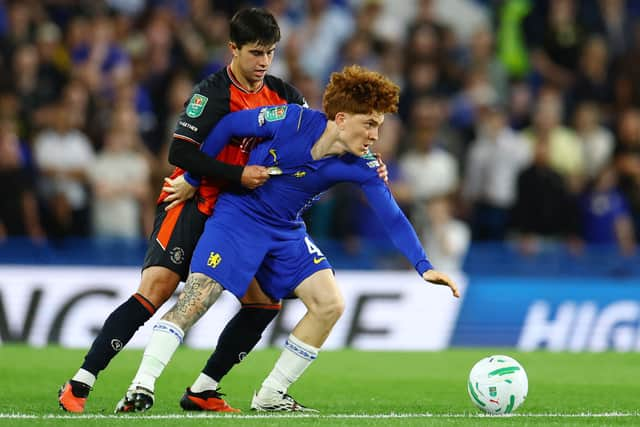

Liam Walsh’s first season at Luton Town threatened to be remembered for all the wrong reasons. Less than two years later, he walked out at Stamford Bridge as the club’s captain.
That image told its own story.
Walsh was handed the armband by Jack Wilshere for Luton’s Carabao Cup meeting with Chelsea on Thursday night, leading the Hatters against a side packed with established Premier League quality. The eventual 2-0 defeat ended Town’s involvement in the competition, but the responsibility placed upon the midfielder represented another significant moment in his remarkable rehabilitation at Kenilworth Road.
When Walsh joined Luton in August 2024, his ability was never seriously in question. Developed by Everton and later a member of the Coventry City side which won the League One title in 2020, he possessed the vision and technical assurance required to dictate matches from midfield.
Availability and discipline, however, became recurring concerns.
The nadir arrived against Oxford United in October 2024, when Walsh was sent off only 36 seconds after being introduced as a substitute. It was an extraordinary and damaging cameo which quickly spread across social media. For many outside Luton, it became the moment with which he was most readily associated.
Walsh has since ensured that it no longer defines him.
His performances under Wilshere last season offered a much better representation of the footballer Luton believed they were signing. He made 40 appearances in all competitions, starting 35 of them — five more appearances than he had managed in any previous campaign.
Those numbers were particularly significant for a player whose career has so often been interrupted by injury. More importantly, Walsh developed into one of Luton’s most influential footballers with the ball.
He provided control in the middle of the pitch, progressed possession and regularly supplied chances for those ahead of him. His importance was demonstrated during the run to the Vertu Trophy final, when his first goal for the club completed the semi-final comeback against Northampton Town. Walsh was subsequently voted the competition’s Player of the Round before helping the Hatters beat Stockport County at Wembley.
A player whose Luton career had once appeared in danger of unravelling had become a trophy winner and an integral part of Wilshere’s plans.
That transformation was rewarded with a new contract in June. Wilshere made clear at the time that retaining Walsh was important to the culture he wanted to build, praising a footballer who continued concentrating on performing even while his future remained unresolved.
The decision to make him captain at Chelsea was the latest demonstration of that trust.
With Jordan Clark unavailable through injury, Wilshere needed somebody capable of setting the tone inside an inexperienced Luton side at one of the most intimidating grounds they will visit this season. Walsh was selected to do it.
Facing Cole Palmer, Morgan Rogers, Estêvão and Reece James, Town were always going to spend long periods without possession. Nevertheless, they reached half-time level and remained in the contest until Welbeck’s header five minutes after the restart. The 2-0 scoreline was respectable given the difference between the two squads and Chelsea’s control of the match.
For Walsh, though, the significance stretched beyond the result.
Captains must represent the standards of their manager and carry the trust of their teammates. They must retain their composure, take responsibility and provide an example to those around them. Considering the questions that surrounded Walsh during the early months of his Luton career, being entrusted with that role at Stamford Bridge was a powerful acknowledgement of how far he has come.
It should not be mistaken for a sentimental gesture. Walsh earned the opportunity through his performances, his improved availability and the influence he now exerts over Wilshere’s team.
At 28, he is also reaching a stage of his career where leadership should become an increasingly important part of his contribution. Luton possess several gifted young players who will require guidance through the demands and unpredictability of a League One season. Walsh has experienced promotions, injuries, criticism, disciplinary setbacks and now success at Wembley. There is value in all of it.
The challenge is to make Thursday night the beginning of a new chapter rather than simply a memorable individual occasion. Luton will need Walsh available consistently and operating at his best if they are to challenge successfully this season.
Nobody should pretend his journey at Kenilworth Road has been flawless. That is precisely what makes the sight of him wearing the armband at Stamford Bridge so meaningful.
Walsh did not arrive at this point by avoiding mistakes. He reached it by responding to them.
His Luton story once appeared likely to be defined by 36 chaotic seconds against Oxford. It can now be represented by 90 minutes as captain at Chelsea - and that may be the clearest evidence yet that his transformation is complete.