
Caddington man jailed after large amount of dangerous chemicals discovered in shed


A man with ‘an interest in extreme right-wing ideologies’ who was found with a large amount of dangerous chemicals in his garden shed has been jailed.
Harry Whittaker, 31, was arrested on May 6, 2024 after officers searched his home address in Caddington.
He’d come to police’s attention after paramedics treated him for injuries linked to exposure to various chemicals he’d been handling.
They alerted officers after Whittaker told them he may have further dangerous substances in his garden shed.
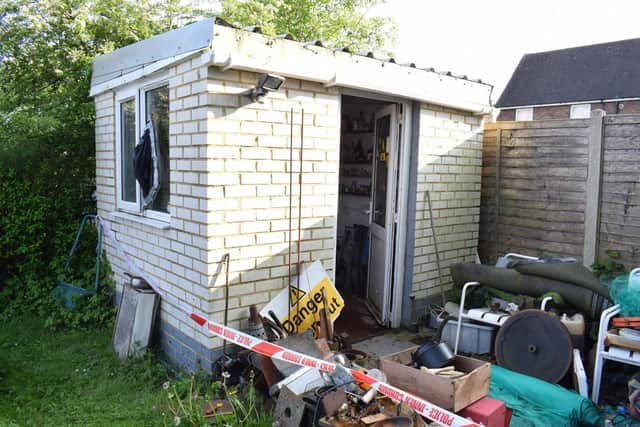
During the initial police search they found improvised explosive devices and it was at this point the Met Counter Terrorism Command were called in.
Police said Whittaker had labelled some of the chemicals using antisemitic or Islamophobic language.
They carried out full examinations on Whittaker’s devices and other possessions, and they also questioned him. But although they found some evidence that he had an interest in some extreme right-wing ideologies, detectives said they found no evidence that he was planning to use the devices or chemicals to target any other persons or as part of any kind of attack.
A crime scene remained at the location for more than two weeks, to allow for the safe removal of various dangerous and potentially toxic chemicals including uranium, potassium cyanide and mercury.
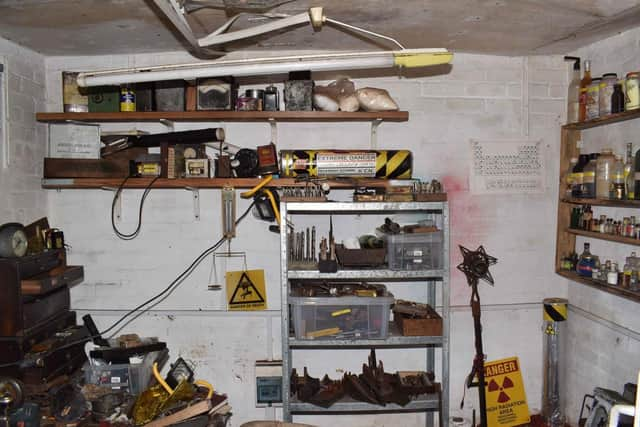
In October last year, Whittaker, was found guilty at the Old Bailey of three counts of making an explosive substance, contrary to section 4(1) of the Explosive Substances Act 1883 and one count of possessing an explosive substance, contrary to section 4(1) of the Explosive Substances Act 1883.
He was found not guilty of one charge of making and one of possessing an explosive substance.
He previously pleaded guilty to four counts of possessing a regulated substance, contrary to section 3 of the Poisons Act 1972.
One charge of possessing ammunition without a firearm certificate, contrary to section 1(1)(b) of the Firearms Act 1968.
He was sentenced today (Wednesday) to three years and nine months in prison. He was also handed a 10-year criminal behaviour order.
Chief Superintendent Jaki Whittred, from Bedfordshire Police, said: “The upset and disruption within the local community following the findings at Mr Whittaker’s address was considerable.
“On behalf of the force and affected community, I would like to express our gratitude to the specialist officers from the Met who led the complex investigation, and to our officers for a swift and professional response to the initial report.
“Once again, I pass on my thanks and admiration to residents across Caddington for their support and understanding during what would have been a deeply concerning time.
“I would like to reiterate how much we value the public as our eyes and ears in the community. If you have concerns about something you’ve heard or seen we would urge you to report it to us.”
Commander Dominic Murphy, head of the Met’s Counter Terrorism Command said: “By making improvised explosive devices and collecting such a toxic array of chemicals his shed, Whittaker’s actions were incredibly reckless and put his whole neighbourhood at risk.
“I am grateful to Bedfordshire Police as well as a host of specialist officers from the military and policing, who we worked with to ensure the safe removal of poisonous and highly toxic substances.
"Whittaker claimed he just had a curiosity with science and that he meant no harm, but in reality he put himself, his family and all of his neighbours in great peril.
“I’d like to thank the local community for their support while we dealt with the issue. The public help us every day, and I would urge anyone who may be concerned about any activity in their local area to trust their instincts and let us know.”
Military personnel from the Explosive Ordinance Disposal (EOD) supported the response and investigation and carried out controlled explosions on the improvised devices, which officers found had been made by Whittaker using black powder – a nitrate-based explosive substance.